Cable Green Video

Watching the Zoom video of Cable Green made me think a lot about how powerful open education is. I thought it was cool how he started working in this area before technology was so accessible. He’s been in the field long enough to actually see the change from when it was hard to find information to now, when almost everything is online. That must have been such an interesting time to work in education and technology, especially since things are still changing so fast today with new tech and AI.

One part that stood out to me was when Green talked about working with teachers to build open educational resources together. I liked how they were paid for their time or could focus on the project instead of teaching a class for a semester, while still being paid. It showed how teachers can collaborate and create something meaningful that helps students. What amazed me most was how much money this project saved. As a university student, I know how expensive textbooks can be, and it’s even worse when you buy one that you rarley need to use. It’s frustrating, especially as student on a budget, trying to save money.

I think was Cable Green and Creative Commons are doing is great. It’s not just about saving money, but about giving everyone a fair chance at learning. Education should be something everyone has access to, no matter their income. I like how Creative Commons gives people control over their work too. You can decide if others can change, reuise it, or just share it as is. It’s such a good system that lets people share knowledge while still respecting ownership.

This connects to our EDCI 336 course as we learn how to create our own websites and blog. This helped me understand more about attributions and having ownership of your work.

Inquiry Post #2

What I tried:

This week I focused on setting up my ukulele and learning my first few chords. I used UkeBuddy to tune it using the standard G-C-E-A method, which is the most common tuning style. It took a few tries to match each pitch, but once I got the hang of it, it wasn’t too bad and it was nice to finally hear it sound right.

Screenshot from UkeBuddy

Then I followed this Youtube video to learn the finger placements for each chord and practiced switching between them.

What I noticed/learned:

At first, pressing down the strings felt super awkward and difficult, especially the G chord, but after a few tries it started sounding smoother. I realized how much practice and muscle memory matter, and that even short practice sessions make a big difference if I stay consistent.

Connection to my future classroom:

Learning these first few chords really reminded me about the importance of patience when teaching something new. If I found it tricky to get my fingers in the right spots, students learning instruements, or any new skill, will need time and encouragment too. This also made me think about my Link 2 Practice class, where I noticed kids remebering songs their teacher used for lessons, they were singing them the rest of the day! It showed how helpful music can be for learning, memory, and keeping kids engaged.

After learning how to tune and play the first few chords, I’m excited to keep going and see what else I can learn next!

Visit to the Pacific School of Innovation and Inquiry

This week, our EDCI 336 class visited the Pacific School of Innovation and Inquiry (PSII) in downtown Victoria. Jeff Hopkins, the founder, gave us a presentation about the school and its unique approach to learning. He explained how students learn through inquiry-based learning, where they get to decide what they learn about and combine different ideas to find answers.The school has around 120 students in grades 9-12, but the age range is 13-19.

It was fascinating to hear him talk about the students and how the school is run. The presentation was held in a classroom that had just been used for a science lesson, where students were studying science through a sci-fi novel. They were analyzing whether what was written in the book was scientifically possible. I thought that was such an engaging and creative way to teach science, especially since students in that room ranged from ages 13-18, which surprised me.

Jeff explained that most students at PSII graduate early and often find university not only easy but also boring compared to their high school experience. I thought it was really cool how much freedom students have in their days at school. There are no bells or blocks, and students have full control of their schedules. They can take lunch whenever they want and even leave to take breaks, but he said most students enjoy what they’re working on so much that they usually stay. I found it interesting that the school rarely deals with behaviour issues or disengagement, because inquiry-based learning keeps students motivated and invested in their projects.

Another part that stood out to me was how inclusive the school is. There are no strict expectations to attend, and tuition is very low compared to other independent schools in the area because PSII believes everyone should have access to this kind of learning. Jeff also mentioned that students considering the school can spend a half day there to see if it’s the right fit.

During the walkthrough, I thought the layout was amazing. They had so many different spaces for students: dark rooms, collaboration rooms (big and small), music studios, 3D printing, workshops, a stage, a lighting booth, and so much more. It was so cool to realize we have a school like this in Victoria, and I’m just finding out about it now after living here my whole life. Another detail that surprised me was that many of the teachers had originally gone to school for elementary education, just like us!

As a future teacher, this visit was super eye-opening and showed the possibilities of inquiry-based learning. Even if I’m teaching in a more traditional school setting, I want to take inspiration from PSII by giving students more voice and choice in their learning. I think even small things like connecting lessons to their interests, encouraging questions, and creative projects, can help students feel more engaged. Seeing how motivated and invested the PSII students are reminded me of how powerful it is when students care about what they’re learning. It makes me want to think about ways I can bring that same energy into my own classroom one day.

Inquiry Post #1

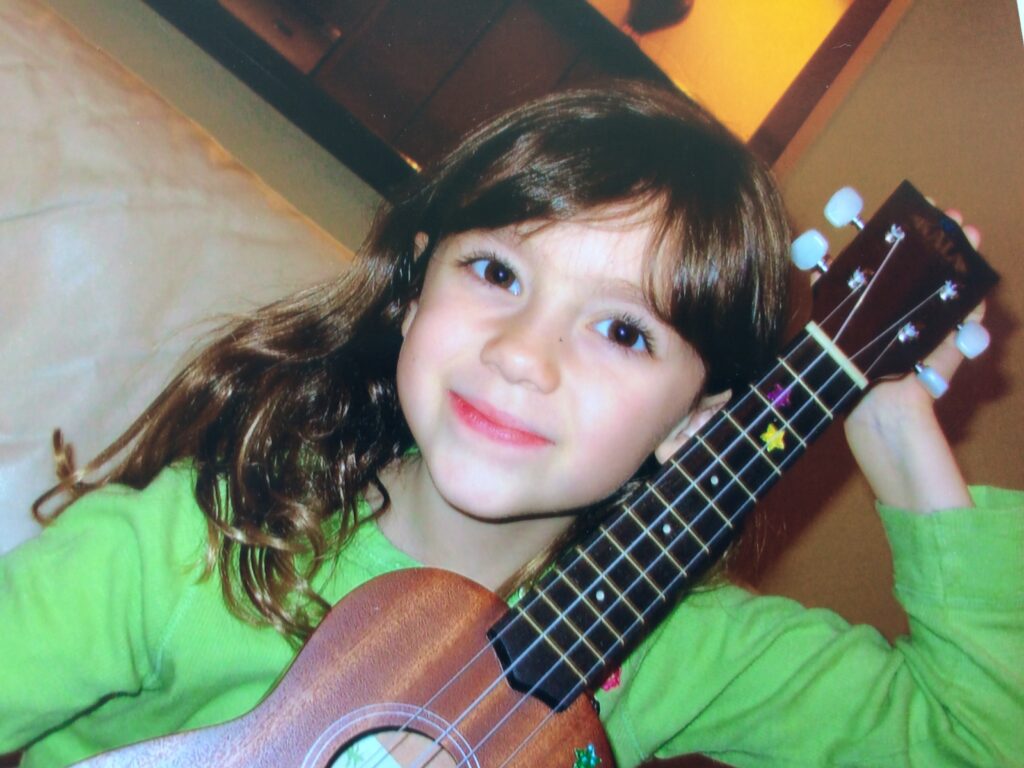
Picture of the blog creator, Charlie Walls, holding a ukulele at age 8
Photo taken by Charlie’s Mom on Iphone. Used with permission.

For my inquiry project, I decided I want to learn how to play the ukulele. I played the ukulele when I was younger, and I’ve always wanted to get back into it, so I thought this was the perfect chance. The ukulele is such a fun instrument and is pretty simple to learn, so I’m excited to be starting! I also think that learning to play the ukulele will be very beneficial in my future classroom.

I grew up surrounded by music and the performing arts, so music has always been a huge part of my life. My love for music is something I have always wanted to incorporate into my future teaching. Throughout elementary school, I was part of a ukulele group called Little Ukers, and I remember feeling so proud and excited to perform for the parents. By the end of the semester, I hope to feel the same way, excited and proud to show off my new skill.

As much as I think about incorporating the ukulele into my future classroom, my main goal is to find a new hobby that I enjoy and can spend my free time on instead of scrolling on my phone. Life gets too busy and chaotic with work and school that we sometimes forget to take a break and make time for ourselves. I think that gaining this new skill will not only be beneficial but also something that makes me feel good.

My plan each week is to learn a simple skill, like how to hold the instrument properly or play a new chord, and not to overcomplicate it, so it stays realistic and achievable. Each week as I reflect on what I’ve learned, I also want to think about how I can incorporate it into my future teaching. I hope to use this blog as a resource for myself in the future, especially as a way to teach it to kids! By the end of the semester, I hope to know a few simple songs and feel confident saying, “I play the ukulele.”

I’m super excited to not only start but also share this ukulele journey and to see how much progress I can make by the end of the semester.

Weekly Reflection: Most Likley to Succeed (2015)

Watching the Most Likely to Succeed documentary completley changed the way I view and think about education. The documentary follows a group of ninth-grade students at High Tech High as they take on a kind of learning that is more creative, meaningful, and flexible, espeacially compared to the more traditional schooling I experienced. At High Tech High teachers had the freedom to design their own projects, and students gained knowledge throough hands-on work rather than memorizing facts. I especially enjoyed the part about Samantha directing the play and watching her growth over the year. She started off as a quiet, shy young girl, and by the exhibition she had taken on a leadership role, grown, and gained more confidence in herself. Those moments demonstrated how powerful it can be when students take ownership of their learning. Looking back at my own ninth grade experience, I realize how little of it felt memorable or relevant compared to what I saw in the film.

The documentary also made me think about how much technology shapes our world today. It’s true that sitting at a desk 7 hours a day listening to a textbook lesson isn’t going to prepare students for the future. Learning hands-on skills and soft skills is so much more important, and it’s so cool how these students were developping those skills early on. By the end of high school they may not have memorized every traditional fact, but they left with creative and curious minds, which in the long run seems more valuable.

At the same time, I do think that traditional schooling still matters, espeacially as a future teacher who will follow the curriculum. But I think combining traditional knowledge with creative problem solving and collaboration is a great way moving forward. Even in my B.Ed. program, I’ve noticed how much I enjoy group work and discussions, and how much I actually learn and take away from them. It’s true that the content I’ve memorized for exams rarely sticks with me, but hands-on learning and working with others does. The film made me realize that educations should be about building relationships, creativity and skills that last beyond a test.

Connections to ISTE Standards and UVic TEP Outcomes:

  • The film demonstrated ISTE Standards for Students such as Empowered Learner (1.1), where students set personal goals and reflected on their projects, and Innovative Designer (1.4), as they created and revised meaningful work. It also showed Creative Communicator (1.6) when students presented their projects to a diverse audience
  • For teachers, it aligns with the ISTE Standard of Facilitator (2.6). Teachers supported rather than dictated, encouraging students to take ownership of their learning.